
Content
Are you looking for QuickBooks helpline for bookkeeping and accounting-related needs but don’t know whom… By applying the below formula to all public offerings, you will be able to calculate an organization’s APIC. Continued acquisitions and a rise in earnings generally result in the growth of owner’s equity. Increased production and revenue, particularly when combined with lower expenditures, can demonstrate its high growth.
- These equity ownership benefits promote shareholders’ ongoing interest in the company.
- For instance, in looking at a company, an investor might use shareholders’ equity as a benchmark for determining whether a particular purchase price is expensive.
- When you’re trying to calculate this, it’s important to understand what your business’s assets and liabilities are.
- Owner’s equity is more commonly referred to as shareholders’ equity, especially in cases where the company is publicly traded.
You can increase negative or low equity by securing more investments in your business or increasing profits. Private equity is often offered to funds, and individuals specialize in direct acquisitions in private firms or leveraged buyouts in publicly traded companies. An organization accepts a loan from a private equity group to finance the purchase of a subsidiary or another business in an LBO deal. Typically, we secure debts by the cash flows and investments of the company under purchase.
How to calculate owner’s equity
Their curated artworks and antique furniture are valued at another $1.5 million. In the case of corporations, such an asset is called stockholder’s equity, while for LLCs, it is referred to as shareholder’s equity. For eg Equity vs Asset is is anything that is invested in the company by its owner. As an entrepreneur that runs their own business, you’ve probably invested a good chunk of your own money into your company. The following formula is used to calculate an owner’s equity. EBetterBooks offers online accounting services like bookkeeping, taxation, payroll management, financial reporting across the US.
Owner A will receive 70% of the total business equity ($140,000), while owner B will receive 30% of the total business equity ($60,000). In a company where two partners have how is owner’s equity calculated equal shares, the total business equity will be divided by 2. For example, each owner will receive $100,000 in a company where the total business equity is $200,000.
Property Equity
One way to think of it is that book value or owner’s equity is the amount that would remain if the business were liquidated and all debts were paid off. Owner’s equity can grow when the owners reinvest profits in the business’s operations and when owners invest additional capital to expand the business. The difference between the statement of owner’s equity and the cash flow statement is that the former portrays the changes in a company’s equity over a period in more detail. Mentioned briefly before, shareholder’s equity is another important term to understand.
Therefore, the value of Jake’s worth in the company is $1.1 million.
you have real work to do.
It is the amount that the owner would receive after selling a property and paying any liens. Unrealized GainUnrealized Gains or Losses refer to the increase or decrease respectively in the paper value of the company’s different assets, even when these assets are not yet sold.
- Mentioned briefly before, shareholder’s equity is another important term to understand.
- All of these add up to create the total assets for a business.
- Also, preferred stockholders generally do not enjoy voting rights.
- Home values can change due to several reasons including market forces, natural disasters, or even tax laws.
- For example, if the machinery of a company had a certain value when purchased in 2010, let’s say $100,000, it will have depreciated in value by 2015.
Below is the balance sheet report of AAPL Inc. which is extracted from its annual report. Below is the balance sheet report of FB which is extracted from its annual report. Let’s take an example to understand the calculation of Owner’s Equity formula in a better manner. Expert advice and resources for today’s accounting professionals. Most importantly, make sure that this increase is due to profitability rather than owner contributions.
Resources created by teachers for teachers
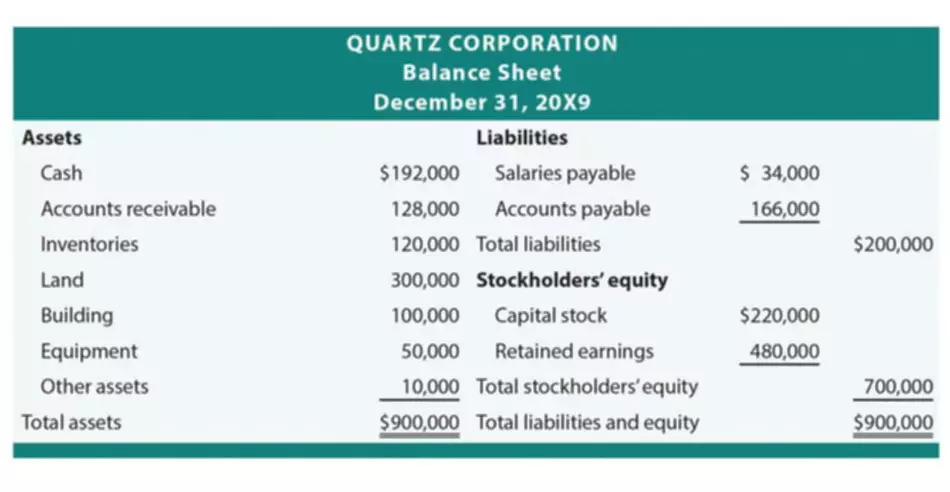
Corporation, accounts like retained earnings, treasury stock, and additional paid-in capital could also be included in your balance sheet. This equity is calculated by subtracting any liabilities a business has from its assets, representing all of the money that would be returned to shareholders if the business’s assets were liquidated. The statement of owner’s equity, also known as the “statement of shareholder’s equity”, is a financial https://www.bookstime.com/ document meant to offer further transparency into the changes occurring in each equity account. This happens at the end of the accounting period for the business. It is determined by using the formula above to deduct liabilities from the business’s assets. On a standard balance sheet, assets are shown on the left side while liabilities are shown on the right. Owner’s equity is also shown on the right side of the balance sheet.
For example, a partnership of two people might split the ownership 50/50 or in other percentages as stated in the partnership agreement. In the United States, property taxes are assessed and collected at the state level. This means that each county will have their own guidelines for what percentage of a home’s value should be considered taxable. By gaining an understanding of how these factors work together, people are able to make more informed decisions when faced with financial opportunities. We now offer 10 Certificates of Achievement for Introductory Accounting and Bookkeeping. Since the statement is mathematically correct, we are confident that the net income was $64,000.
Financial resources or assets are removed from a firm for the owner’s benefit. Small businesses have two ways to reduce their cost of manufacturing.
- Equity represents the shareholders’ stake in the company, identified on a company’s balance sheet.
- For example, it doesn’t tell us whether a business is profitable or not, what its operating margin is, or whether it produces positive operating cash flow.
- Not maintaining the assets will rapidly depreciate them, consequently reducing the owner’s equity in the process.
- Owner’s Equity is an owner’s share or the ownership in the business which is the amount of the business assets that are owned by the owners of the business.
- This is a private form of ownership—the sole proprietor, or owner, has possession of all the company’s equity.